Many parents wonder whether children who "just play" at preschool are really learning. They are, and often more deeply than children who only copy and memorise. Here's what play-based learning is and why good preschools use it.
What is play-based learning?
Play-based learning is an approach where children learn through meaningful, hands-on play that a teacher plans and guides. It isn't free-for-all playtime. Each activity has a goal, such as learning colours, counting, new words or taking turns, but children reach that goal by exploring, experimenting and talking.
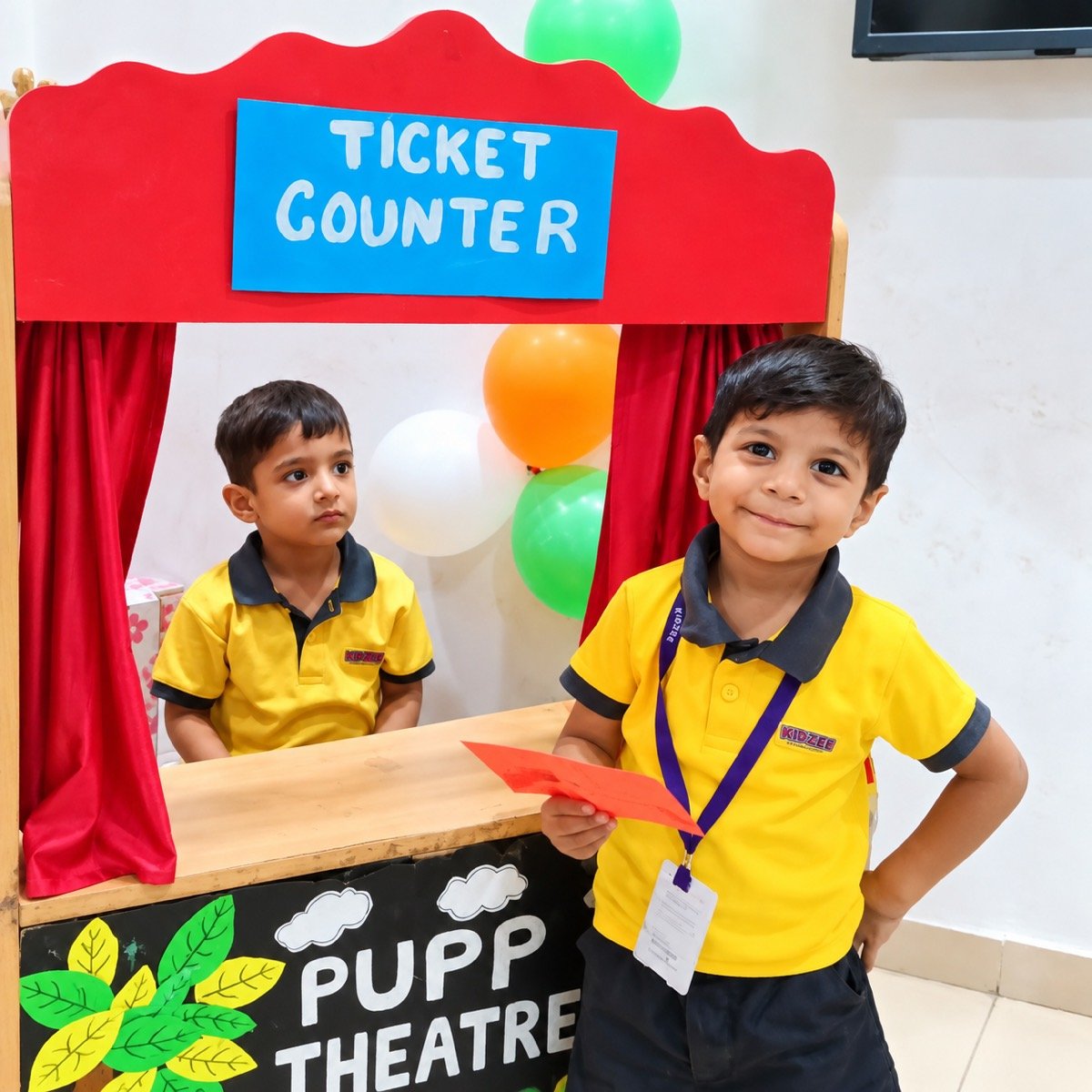
For example, instead of reciting numbers 1 to 10, children might count fruit for a pretend shop, then "pay" with paper coins. They learn counting, and also language, sharing and simple problem-solving.
How play helps children learn
- Longer attention span: children stay with activities they enjoy.
- Problem-solving: puzzles, blocks and sorting games teach children to try, fail and try again.
- Language: role play and group games get children talking and listening.
- Teamwork: sharing, taking turns and waiting are learned in real situations.
- Curiosity: children ask "why?" and "what if?", which is the start of scientific thinking.
- Physical skills: cutting, threading, climbing and dancing build fine and gross motor skills.
Play and brain development
The years from 2 to 6 are a period of very rapid brain growth. When children use imagination, move their bodies and solve small problems, they build the connections that later support reading, maths and self-control. India's National Education Policy 2020 recognises this and recommends play and activity-based learning for the foundational stage.
Play-based vs traditional learning
| Traditional (rote) | Play-based | |
|---|---|---|
| How children learn | Repeating and memorising | Doing, exploring and talking |
| Focus | Getting the right answer | Understanding and applying |
| Child's role | Listening | Taking part |
| How it feels | Often stressful for young children | Enjoyable, so learning sticks |
Does play-based learning prepare children for Class 1?
Yes. Good preschool programs gradually add structure: by Senior KG, children are recognising letters and sounds, writing, counting and following classroom routines. The difference is that they get there with confidence and a love of learning.
Play-based learning at Kidzee Ramnagar
In our Playgroup, Nursery and KG classes, children learn through stories, rhymes, art, music, movement and hands-on activities, with structure increasing as they grow. Explore our programs or book a visit to see it in action.